
Installing a Level 2 home EV charger is a straightforward project in terms of its scope, but it involves licensed electrical work, permits, and decisions that affect both cost and long-term flexibility. This article covers each stage of the process in order — from evaluating the existing electrical service through to using the installed equipment — with specific reference to Canadian requirements under the Canadian Electrical Code.
Step 1: Evaluating Your Electrical Service
The starting point for any home EVSE installation is understanding the current electrical panel and service entrance. A licensed electrician will assess three things: service amperage, available breaker capacity, and the panel's physical location relative to where the charger will be installed.
Service Amperage
Most Canadian homes built after the mid-1980s have 200-amp service panels, which can typically accommodate a Level 2 EVSE without a service upgrade. Homes with 100-amp service — common in older housing stock — may require a service upgrade if the panel is already running close to capacity. A 40-amp dedicated circuit for a Level 2 charger represents 40% of a 100-amp panel's capacity, which may leave insufficient headroom for existing loads.
An electrician performing a load calculation will add up the expected simultaneous loads (HVAC, range, dryer, water heater, lighting) and determine whether adding EV charging is feasible without upgrading the service. In some cases, an energy management system (EMS) or smart EVSE with demand response capability can reduce the effective load by automatically dialing back charging during high-demand periods, avoiding the need for a panel upgrade.
Available Breaker Slots
A dedicated two-pole breaker is required for a 240V EVSE circuit. If the panel's breaker slots are full, a tandem or slimline breaker can sometimes free up space, but this must be confirmed as compatible with the specific panel model. A sub-panel addition is another option if significant expansion is needed.
The Canadian Electrical Code (CSA C22.1) requires that EVSE circuits be sized at 125% of the continuous load. For a 32-amp EVSE drawing 32A continuously, the circuit must be rated at 40A and protected by a 40A breaker. This is standard practice and is factored into any quote from a licensed electrician.
Step 2: Choosing an EVSE Unit
The EVSE unit itself — the wall-mounted charger — is available in hardwired and plug-in variants. Both perform identically from a charging perspective; the choice depends on portability preferences and local permit requirements.
Hardwired vs. Plug-In Units
| Configuration | Notes | Portability |
|---|---|---|
| Hardwired (direct connection) | Permanent installation; may require permit and inspection in all provinces | Not portable |
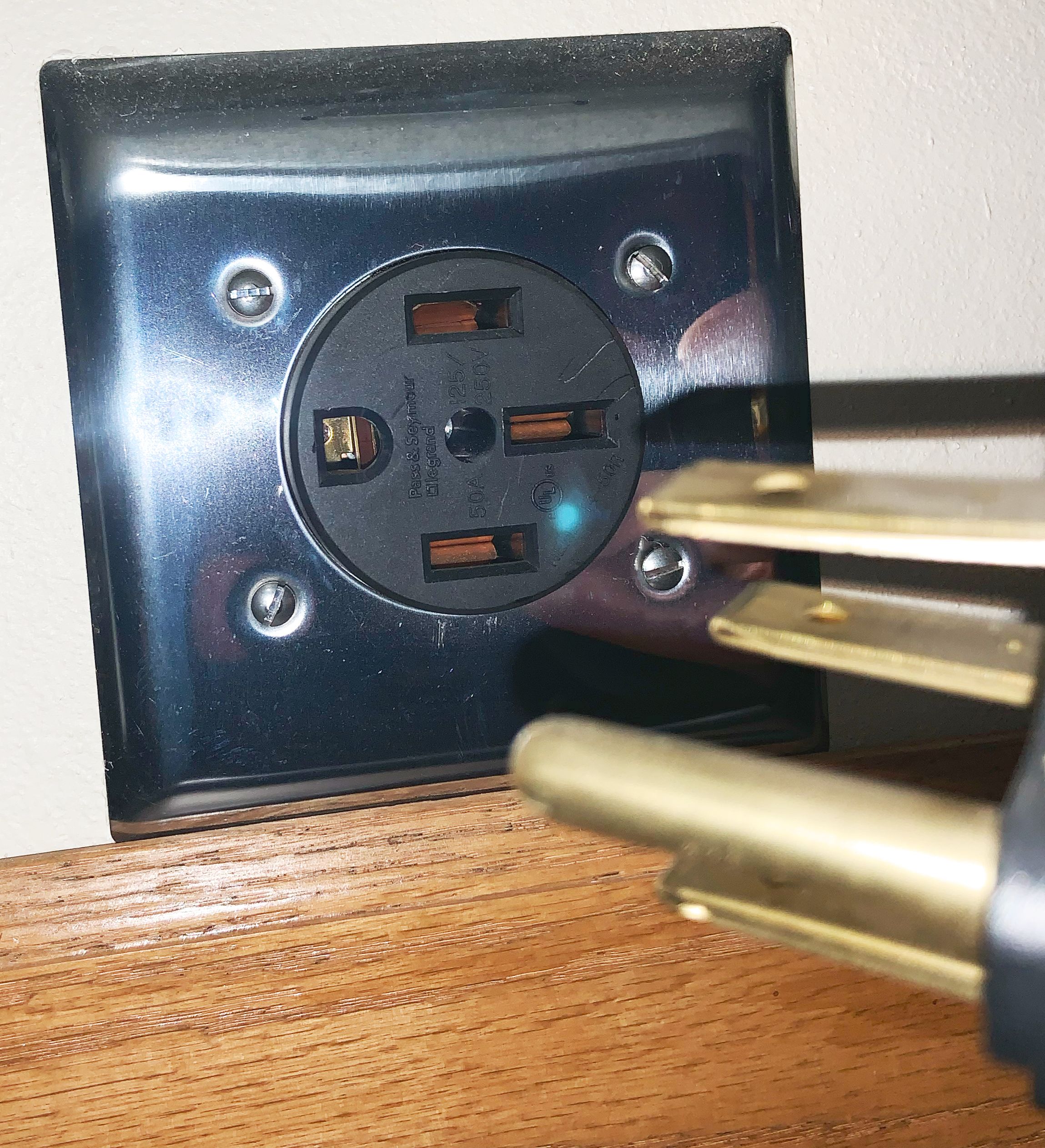
| Plug-in to NEMA 14-50 | Outlet installed by electrician; EVSE is removable | Can move with owner |
| Plug-in to NEMA 6-50 | 250V, 50A; less common but used for some units | Can move with owner |
Smart Features
Many current EVSE units include Wi-Fi connectivity, scheduled charging, and energy monitoring. Some integrate with utility time-of-use (TOU) rate programs, allowing the vehicle to charge during off-peak hours automatically. Hydro-Québec, BC Hydro, and Toronto Hydro all offer TOU or off-peak rate options, and the savings from overnight charging at lower rates can be meaningful over time.
Step 3: Permits and Inspections
Electrical permits for EVSE installations are required in most Canadian provinces. The permit process varies by municipality but typically involves:
- Application filed by the licensed electrician (not the homeowner in most cases)
- Inspection scheduled after the rough-in work is complete
- Final inspection after the EVSE unit is mounted and operational
- Certificate of completion issued to the homeowner
Working without a permit creates liability issues and can affect home insurance coverage. Some insurance providers require proof of permitted electrical work when EVSEs are involved in claims.
Step 4: Wiring and Physical Installation
The electrician will run conduit or appropriate cable from the panel to the installation location — typically a garage wall. Wire gauge is determined by the circuit size: 8 AWG copper for a 40-amp circuit, 6 AWG for 50 or 60 amps. The distance from panel to installation point affects the cost; longer runs require more material and labour.
Outdoor Installation Considerations
EVSEs installed outdoors require weatherproof enclosures and appropriate wiring methods for wet locations. Conduit is typically used rather than direct-burial cable for garage exterior or driveway-adjacent installations. Cold-weather rated EVSEs are available for locations where the charger itself may be exposed to extreme temperatures, though the cable and connector are the more common failure point in cold climates.
Step 5: Rebates and Incentive Programs
Federal and provincial programs have periodically offered rebates on EVSE hardware and installation costs. The availability of these programs changes; the most current information is available through official government sources.
Federal Programs
Natural Resources Canada's Zero Emission Vehicle Infrastructure Program (ZEVIP) has funded public, workplace, and multi-unit residential charging installations. Residential single-family home rebates are less commonly covered under ZEVIP, which focuses more on shared and public infrastructure, but some provincial programs fill this gap.
Provincial Programs
- British Columbia: CleanBC has offered rebates for Level 2 EVSE equipment and installation at single-family homes, condos, and rental properties under various program cycles.
- Quebec: Roulez vert (administered by the Quebec government) has included EVSE rebates as part of broader EV incentive packages.
- Ontario: The province has not maintained a standing residential EVSE rebate program in recent years, though some utilities have run limited programs.
- Other provinces: Programs in Alberta, Nova Scotia, and Manitoba have been introduced and modified over time; checking with the provincial government or utility is recommended.
Rebate programs are time-limited and depend on provincial budget allocations. The Natural Resources Canada website maintains a current list of available programs: nrcan.gc.ca – Electric Vehicles.
Typical Cost Ranges
Installation costs vary by region, panel condition, and installation complexity. The ranges below are general and do not account for panel upgrades or especially long wire runs.
| Component | Approximate Range (CAD) |
|---|---|
| EVSE unit (Level 2, J1772) | $400 – $1,200 |
| Electrician labour and materials | $500 – $1,500 |
| Permit fee | $75 – $250 |
| Panel upgrade (if required) | $2,000 – $5,000+ |
Rebate programs, where available, typically offset $200–$600 of these costs depending on the province and program terms.

