Understanding Electric Vehicle Charging Infrastructure
A breakdown of Level 1, Level 2, and DC fast charging options across Canada — including home installation requirements and public network coverage.

Three Tiers of EV Charging
Canada's charging network spans three distinct levels, each suited to different use cases, vehicles, and locations. Understanding these differences helps EV owners plan charging around daily needs.
Standard Household Outlet
Level 1 charging uses a standard 120V household outlet and requires no additional equipment beyond the EVSE cord supplied with the vehicle. Typical charge rates add 6–8 km of range per hour, making it practical for overnight charging of plug-in hybrids or short-range EVs with predictable daily mileage under 60 km.
240V Dedicated Circuit
Level 2 equipment operates on a 240V circuit and delivers 25–40 km of range per hour depending on the charger's output and the vehicle's onboard charger capacity. A dedicated circuit installation through a licensed electrician is required. Most Canadian homes with a standard electrical panel can accommodate a Level 2 EVSE.
High-Power Public Charging
DC fast chargers bypass the vehicle's onboard AC-to-DC converter and deliver direct current at 50–350 kW. A 20–80% charge can be reached in 20–45 minutes depending on the network standard (CHAdeMO, CCS Combo, or Tesla's proprietary connector). These stations are positioned along highways and in commercial areas rather than residential settings.
What Home Installation Involves
Installing a Level 2 EVSE at home requires electrical work that varies by province and existing panel capacity.
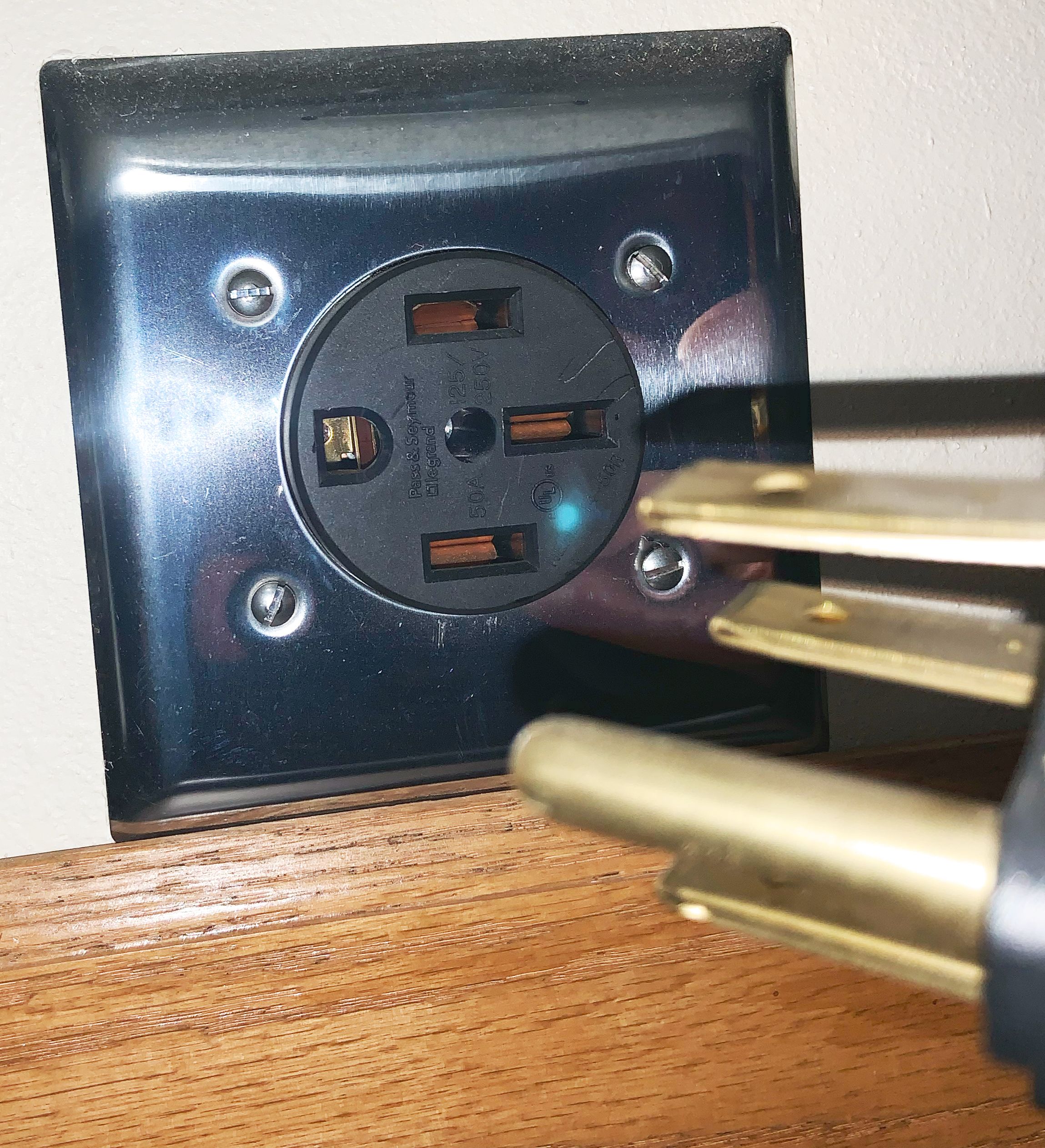 Electrical
Panel Capacity and Circuit Requirements
A Level 2 EVSE typically draws 32–48 amps at 240V. Homes with older 100-amp panels may require a panel upgrade before installation. A licensed electrician must assess the service entrance, available breaker slots, and wiring distance to the garage or parking area. Permits are required in most Canadian municipalities.
 Rebates
Federal and Provincial Incentive Programs
Natural Resources Canada operates the Zero Emission Vehicle Infrastructure Program (ZEVIP), which has funded public and workplace charging installations. Some provinces, including British Columbia and Quebec, have offered residential rebates for EVSE hardware and installation costs. Program availability and amounts change regularly; the NRCan website publishes current program details.
Canada's Public Charging Landscape
Public charging networks in Canada operate under several major brands, with coverage varying significantly by province and corridor.
FLO (AddÉnergie)
FLO is one of Canada's largest public charging network operators, with stations concentrated in Quebec, Ontario, and British Columbia. The network includes Level 2 stations in parking facilities, shopping centres, and municipal lots, as well as DC fast chargers along select highway corridors. Charging is accessed via app or RFID card.
Tesla Supercharger Network
Tesla's Supercharger network has opened to non-Tesla vehicles in Canada through the CCS Combo adapter system. Stations are positioned along major travel routes, and newer V3 Superchargers deliver up to 250 kW. Non-Tesla users access the network through the Tesla app with per-kWh billing where available provincially.
Petro-Canada FAST Charge
Petro-Canada operates a coast-to-coast network of DC fast chargers positioned at roughly 250 km intervals along the Trans-Canada corridor and major provincial highways. Most stations offer both CCS and CHAdeMO connectors. The network was developed with government infrastructure funding aimed at reducing range anxiety on long-distance drives.
Articles on EV Charging in Canada
Detailed coverage of each charging tier, home installation process, and the state of public infrastructure.

Level 1, Level 2, and DC Fast Charging: A Comparison for Canadian EV Drivers
How the three charging tiers differ in speed, cost, and practical application — with specific considerations for Canadian climate and driving patterns.
Read article →
Home EV Charger Installation in Canada: What the Process Actually Involves
A walkthrough of the steps, permits, electrical requirements, and costs involved in adding a Level 2 EVSE to a Canadian home.
Read article →
Public Charging Networks in Canada: Coverage, Standards, and Access
An overview of Canada's major public charging operators, their geographic coverage, connector standards, and how access and billing work.
Read article →